

Telecom
Three journey workstreams. Thirty-two interviews. One picture everyone could build from.
The stakes
A customer experience that grew piecemeal across billing, onboarding, and support. Nobody can say where the real breakdowns are or who owns fixing them.
The challenge
Business customers were churning. Internal teams had three different theories about why, and each team was building solutions to its own theory. Sales blamed pricing. Support blamed response times. Product blamed the onboarding flow. The problem with having three theories is that you end up fixing three things instead of the one thing that's actually broken. Before the company could invest in a fix, someone needed to find out what was actually wrong.
What I did
Led a six-month discovery and service design engagement covering three journey workstreams: SMB customer onboarding, billing, and support
Conducted 32 in-person interviews across 5 markets with both customers and frontline employees, to capture the gap between the official experience and the actual one
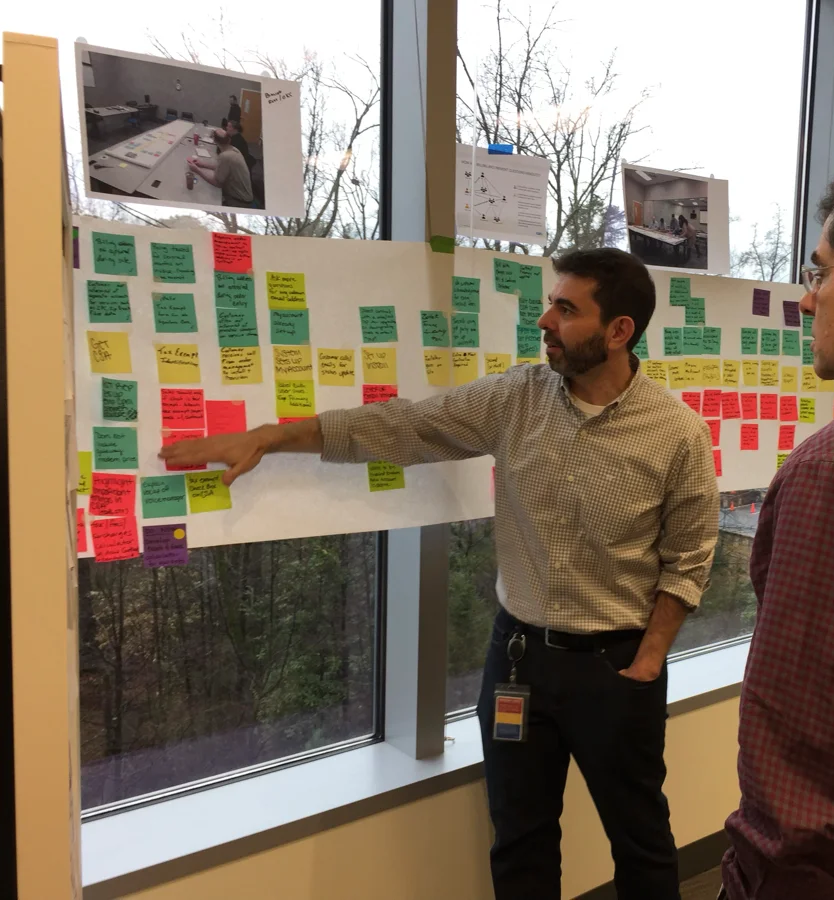
Facilitated 8 employee workshops to build future-state service blueprints, moving from what's broken to what the organization could actually build against
Produced a billing segmentation identifying three distinct SMB payment behaviors that the product team had been flattening into one
From the project
What changed
From three competing theories to blueprints the org could build against.
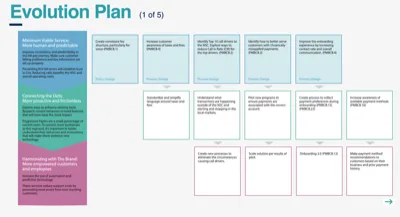
The billing segmentation changed how the product team thought about their customers. Three distinct SMB payment behaviors sounds like a small finding. In practice it meant the company had been building billing features for an average customer who didn't exist. The taxonomy let them stop treating all SMBs the same, and start building for how they actually paid. The service blueprints gave execution teams a shared artifact: not a research report that summarizes what's broken, but a working document that maps customer needs to internal processes and technology, the kind of thing a team can actually hand to engineering.
Have a question like this?
Let’s talk about your project.
Every engagement starts with a conversation about the decision you’re trying to make.