

Small Business Marketing
Three studies with small business owners. One of them flipped everything the client thought they knew.
The risk
Moving fast on assumptions about what customers need, then shipping something that solves a problem nobody actually has.
The challenge
Three separate engagements, three different blind spots: understanding an underserved customer segment, sizing up the competition, and fixing a confusing signup flow. Each one was a different question the team couldn't answer from the inside.
What I did
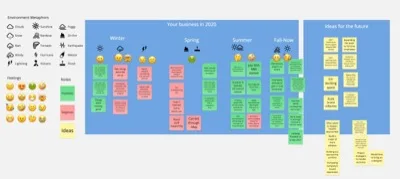
The first was a 10-person remote interview study with BIPOC small business owners across the US. Rather than a standard interview format, each session used a timeline activity: participants mapped their 2020 business experience across positive and negative moments, building a picture of how the year had actually unfolded for them in their own words. One finding shifted the team's core assumption. Participants didn't connect their hardships to demographic identity. They connected them to their industry and their geography. That reframed the product opportunity away from a targeted program and toward broader applicability.
Ran 8 interviews with service-sector SMBs, paired with a teardown of 15+ competitor platforms. The finding that stuck: customers thought of the platform as an email tool. They wanted an all-in-one marketing solution. That gap went straight to the roadmap.
Conducted 8 moderated usability tests of the domain authentication flow, testing both the smooth path and the error paths. The real blocker wasn't technical difficulty. It was confidence. Users weren't confused about what to do. They were afraid of breaking something. The fix was in the copy and the help content, not the workflow.
From the project
What changed
Research honest enough to tell you when you're wrong.
Each study produced a different kind of change. The pandemic research shifted how the client framed a product initiative, away from a demographic-targeting approach and toward broader functionality. The competitive study put a specific gap on the roadmap. The domain authentication study changed how the team thought about the problem: once they understood the blocker was emotional, not technical, the design decision was obvious.
He was able to synthesize the customer feedback in a short period of time so we could immediately act on the results.
Product Manager
Have a question like this?
Let’s talk about your project.
Every engagement starts with a conversation about the decision you’re trying to make.